
Beneficial gut bacteria are defined as microbial species that actively support digestion, immune function, and metabolic health within the human gastrointestinal tract. To identify beneficial gut bacteria in your own body, you need to understand which species matter, what they produce, and how to detect their presence. The gut microbiome contains trillions of microscopic organisms, and the balance between helpful and harmful species shapes everything from your energy levels to your resistance to infection. Knowing what a healthy gut flora looks like gives you a real starting point for improving it.
Which bacterial species are considered beneficial and why
The most recognized beneficial bacteria in gut health belong to two major genera: Lactobacillus and Bifidobacterium. Lactobacillus species ferment dietary sugars into lactic acid, which lowers gut pH and makes the environment hostile to harmful pathogens. Bifidobacterium species support immune function by interacting with gut-associated lymphoid tissue, the immune network lining your intestinal wall.
Faecalibacterium prausnitzii is one of the most studied and arguably most important species in a healthy gut. It comprises 5–15% of gut bacteria in healthy individuals and produces butyrate, a short-chain fatty acid that supplies roughly 70% of the energy colon cells need to function. Low levels of F. prausnitzii are consistently linked to inflammatory bowel conditions, making it a reliable marker of gut health.
Akkermansia muciniphila is an emerging probiotic candidate that lives in the mucus layer of the gut wall. A 2026 analysis covering 901 metagenome-assembled genomes identified Akkermansia muciniphila and Bifidobacterium adolescentis among 45 candidate probiotic genomes with high predicted probiotic scores. That finding signals that the list of what we call “good gut microbes” is still expanding as sequencing technology improves.
Beyond individual species, microbial diversity is the single strongest indicator of a healthy gut microbiome. A diverse community has functional redundancy, meaning multiple species can perform the same critical job if one population drops. Gut bacteria also synthesize vitamins B and K, contributing directly to your body’s micronutrient supply. No single “super microbe” defines gut health. The whole community does.
Key beneficial species and their primary roles:
- Faecalibacterium prausnitzii: Produces butyrate to fuel colon cells and reduce inflammation
- Bifidobacterium adolescentis: Supports immune regulation and ferments dietary fiber
- Lactobacillus acidophilus: Inhibits pathogens through lactic acid production and competes for gut wall attachment sites
- Akkermansia muciniphila: Strengthens the gut mucus barrier and is linked to metabolic health
- Roseburia intestinalis: Another butyrate producer that supports colon integrity and reduces gut permeability
How can you identify the presence of beneficial gut bacteria?
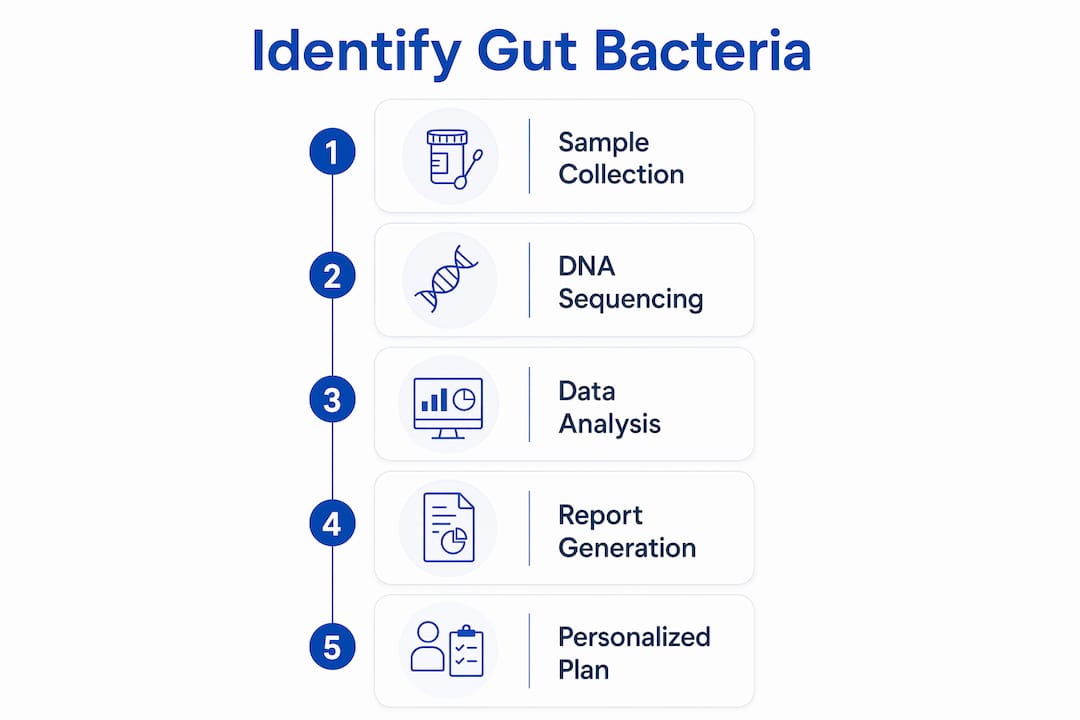
The clinical standard for assessing gut microbial composition is microbiome sequencing, specifically 16S rRNA gene sequencing or shotgun metagenomics. These tests analyze a stool sample and return a breakdown of which species are present and in what proportions. Shotgun metagenomics goes further by revealing functional genes, showing not just who is there but what they are capable of doing.
Practical steps for a gut health assessment:
- Collect a stool sample using a home collection kit from a microbiome testing service. Proper storage and prompt submission matter for accurate results.
- Review your diversity score. A high diversity score generally correlates with better health outcomes. Look for the presence of Faecalibacterium prausnitzii, Bifidobacterium, and Akkermansia in your report.
- Check metabolite markers. Measuring metabolites in stool or plasma can give clues about gut function, but results depend heavily on recent diet and timing. Use them as context, not as a standalone verdict.
- Track digestive symptoms. Bloating, irregular bowel movements, and food sensitivities are indirect signals of microbial imbalance. Consistent symptoms after eating fiber-rich foods may indicate low populations of fiber-fermenting bacteria.
- Monitor your diet diversity. A wide variety of plant foods in your weekly diet correlates with higher microbial diversity. Tracking what you eat is a low-cost proxy for gut health between formal tests.
Pro Tip: Individual responses to diet and microbiome changes vary significantly, so a single test result is a snapshot, not a verdict. Repeat testing after a dietary intervention gives you far more useful data than a one-time reading.
Symptoms alone cannot confirm which species are present or absent. Formal sequencing is the only way to identify specific bacteria. That said, consistent digestive comfort, regular bowel movements, and good energy after meals are reliable signs that your gut microbial balance is working in your favor.
Diet and lifestyle habits that support beneficial gut bacteria
Food is the most direct lever you have over your gut microbiome. Beneficial bacteria feed on dietary fiber, specifically prebiotic fibers found in plants. Experts recommend consuming 30 different plant foods weekly to maximize microbial diversity. That number sounds high, but it includes herbs, spices, nuts, seeds, legumes, fruits, and vegetables. A single meal with five plant ingredients gets you a sixth of the way there.
Foods and habits that actively support good gut microbes:
- Fermented foods: Yogurt, kefir, kimchi, sauerkraut, and miso introduce live bacterial cultures and support microbial diversity
- Prebiotic-rich foods: Garlic, onions, leeks, asparagus, and oats feed Bifidobacterium and Lactobacillus populations directly
- Resistant starch: Boiling then chilling potatoes increases their resistant starch content, which feeds beneficial microbes in the colon
- Polyphenol-rich foods: Blueberries, dark chocolate, green tea, and extra-virgin olive oil support Akkermansia muciniphila and reduce inflammatory bacteria
- Limiting broad-spectrum antibiotics: Unnecessary antibiotic use wipes out beneficial species indiscriminately. Microbiome recovery after antibiotics can take months.
Gradual dietary changes work better than sudden overhauls. Slow increases in fiber and fermented foods allow your microbiome to adapt without triggering bloating or cramping. This is especially true after a course of antibiotics, when the gut community is rebuilding from a reduced state.
Pro Tip: Whole foods build a more diverse microbiome than supplements alone. Probiotic supplements typically contain a handful of strains, while fermented foods introduce dozens of microbial varieties alongside fiber, vitamins, and polyphenols.
Sleep, stress management, and physical activity also shape your gut flora. Chronic stress raises cortisol, which disrupts the gut barrier and reduces microbial diversity. Regular moderate exercise is consistently associated with higher levels of butyrate-producing bacteria. These lifestyle factors are not secondary. They are as relevant as diet for gut health and immunity.
Common challenges when identifying and supporting beneficial gut bacteria
Interpreting microbiome test results is harder than it looks. Reference ranges for “normal” microbial populations are still being established, and what counts as a healthy level of Faecalibacterium prausnitzii for one person may differ for another. Treat your results as a personal baseline, not a pass-or-fail score.
Common pitfalls to avoid:
- Over-relying on probiotic supplements. Clinically validated probiotic strains target specific health goals. A general probiotic marketed for “gut health” may not address your actual microbial gaps. Choose strains backed by research for your specific concern, whether that is digestion, immunity, or antibiotic recovery.
- Expecting fast results. Meaningful shifts in microbial composition take weeks to months of consistent dietary change. One week of eating well will not show up clearly in a retest.
- Ignoring dysbiosis signals. Persistent bloating, loose stools, skin flares, and frequent infections can all point to microbiome imbalance. These symptoms warrant a proper gut health assessment, not just a probiotic purchase.
- Applying universal recommendations. Individual responses to diet and supplementation vary significantly. What raises Bifidobacterium levels in one person may have little effect in another, depending on existing microbial populations and genetics.
- Skipping professional guidance. If symptoms are severe or persistent, a gastroenterologist or registered dietitian with microbiome expertise should be part of your plan. Self-directed testing is a starting point, not a replacement for clinical care.
Key Takeaways
A healthy gut microbiome is defined by diversity and function, not by the presence of any single species. Identifying and nurturing beneficial bacteria requires both the right testing approach and consistent dietary habits.
| Point | Details |
|---|---|
| Diversity beats single species | A microbiome with many species is more resilient than one dominated by any single “good” bacterium. |
| Sequencing is the gold standard | Shotgun metagenomics or 16S rRNA testing reveals which beneficial species are actually present in your gut. |
| 30 plant foods per week | Eating 30 different plant-based foods weekly is the most evidence-backed dietary target for microbial diversity. |
| Gradual changes work better | Slow increases in fiber and fermented foods prevent digestive upset and allow the microbiome to adapt effectively. |
| Supplements have limits | Probiotic supplements provide fewer strains than whole fermented foods and must be clinically validated for your specific health goal. |
What I have learned from watching thousands of gut reports
Working closely with microbiome data has taught me one thing above all else: the gut is deeply personal. Two people eating the same diet for six months can end up with very different microbial profiles. That is not a flaw in the science. It is the science.
The biggest mistake I see is people chasing a specific species. They read that Akkermansia muciniphila is linked to metabolic health and immediately buy a supplement. But if the rest of their microbiome is low in diversity, adding one strain changes very little. The community context matters more than any individual player.
What actually moves the needle, in my observation, is patience combined with dietary consistency. People who commit to 25 or more plant foods per week for three months show measurable shifts in their diversity scores. People who add a probiotic capsule and change nothing else rarely do. Whole foods win, not because supplements are useless, but because food brings fiber, polyphenols, and live cultures together in a way no capsule replicates.
The other thing worth saying plainly: a microbiome test is not a diagnosis. It is a map. A map only helps if you know where you want to go and are willing to take the steps to get there. The readers who get the most from their results are the ones who use them as a starting point for gradual, sustained change, not a one-time curiosity.
— Digital
What Digitalgut reveals about your gut microbiome
Understanding which bacteria live in your gut is the first step. Acting on that knowledge is where real change happens.

Digitalgut delivers a personalized gut report built on peer-reviewed research, showing you exactly which beneficial species are present, your diversity score, and what those results mean for your digestion and immunity. The platform’s interactive knowledge graph connects your specific microbes to compounds, health conditions, and evidence-based recommendations. You see your gut as a system, not just a list of names. For anyone serious about understanding their microbiome, a Digitalgut report is the clearest starting point available.
FAQ
What are beneficial gut bacteria?
Beneficial gut bacteria are microbial species that support digestion, immune function, and metabolic health. Key examples include Lactobacillus, Bifidobacterium, Faecalibacterium prausnitzii, and Akkermansia muciniphila.
How do I identify good gut bacteria in my body?
Shotgun metagenomics or 16S rRNA sequencing of a stool sample is the most reliable method. These tests reveal which species are present and in what proportions, giving you a concrete picture of your gut flora.
What does a healthy gut microbiome look like?
A healthy microbiome is defined by high diversity, functional redundancy, and the presence of butyrate-producing species like Faecalibacterium prausnitzii. No single species defines gut health on its own.
Can diet alone improve my beneficial gut bacteria?
Diet is the most powerful tool for shifting microbial composition. Eating 30 different plant foods weekly, adding fermented foods, and reducing processed food intake consistently supports growth of beneficial species over time.
Are probiotic supplements enough to restore gut health?
Probiotic supplements provide limited strains and must be clinically validated for your specific health goal. Whole fermented foods and dietary fiber build a more diverse and resilient microbiome than supplements alone.