
Microbiome diversity is defined as the variety and abundance of microbial species living in your gut, and research links it directly to aerobic fitness capacity, particularly VO2 max. A 2026 study from the American Physiological Society found that alpha diversity, the standard scientific measure of species richness within a single gut sample, correlates strongly with aerobic fitness in men but not in women. That sex-specific finding changes how fitness enthusiasts should think about the link between gut health and physical performance. Microbiome diversity and fitness level are connected, but the relationship is more nuanced than most training guides acknowledge.
How does exercise influence gut microbiome diversity?
Exercise reshapes the gut microbiome in measurable ways, and the type of training you choose determines which microbial changes you get. Not all workouts produce the same microbial outcomes.
Aerobic exercise and microbial richness
Twelve weeks of low-intensity aerobic exercise significantly increases beneficial bacteria like Akkermansia muciniphila and Prevotella copri, two species linked to gut barrier integrity and carbohydrate metabolism. That increase in microbial richness translates to better metabolic efficiency during sustained cardio efforts. Aerobic training is the most reliable driver of diversity of gut bacteria among all exercise modalities studied to date.

Resistance training and SCFA producers
Resistance training promotes SCFA-producing bacteria but does less to increase overall microbial diversity. Short-chain fatty acids (SCFAs) like butyrate fuel colon cells and reduce gut inflammation. Strength training still delivers real gut health benefits. The gains just show up in a different part of the microbial ecosystem than aerobic work produces.
Exercise intensity matters more than most people realize
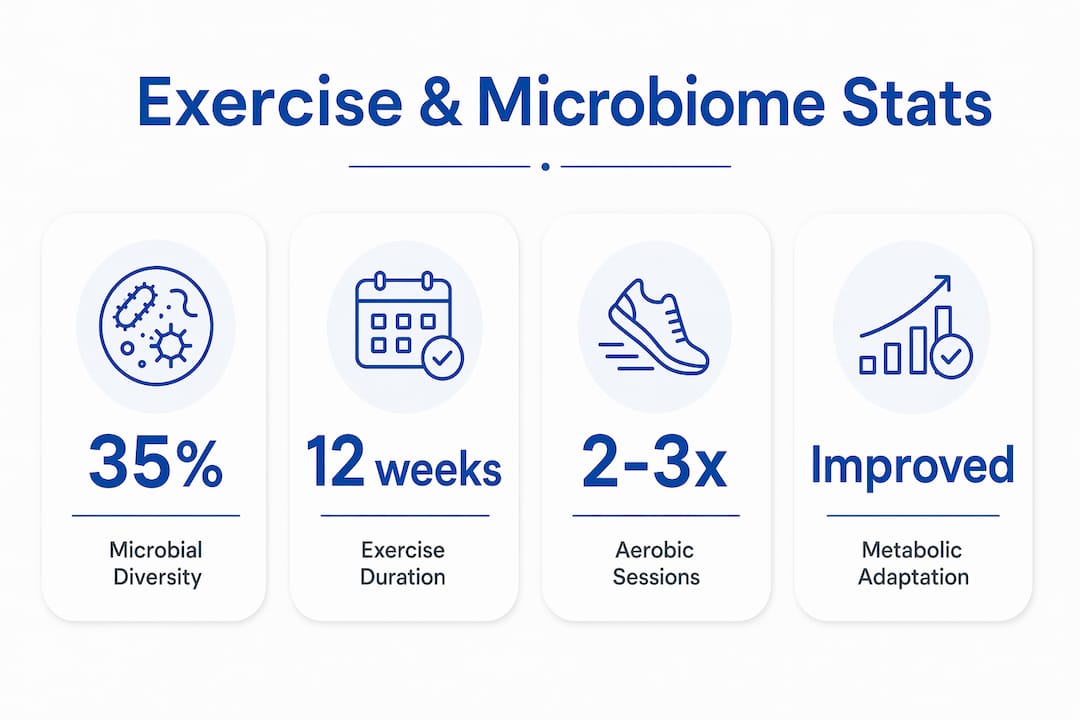
Moderate-intensity, long-term aerobic exercise improves gut microbiota richness and metabolic function. Excessive, high-intensity prolonged exercise can actually impair microbiome stability. That finding surprises most competitive athletes who assume more intensity always means better adaptation. The gut does not respond well to chronic overload without adequate recovery.
Here is how different training types compare in their gut microbiome effects:
- Low-to-moderate aerobic exercise: Increases overall microbial richness, boosts Akkermansia muciniphila, improves metabolic efficiency
- High-intensity aerobic training: Short-term diversity gains possible, but chronic overtraining risks microbiome disruption
- Resistance training: Promotes SCFA-producing species, supports gut barrier function, limited effect on alpha diversity
- Combined aerobic and resistance programs: Yield the most comprehensive microbial benefits linked to physical performance
Pro Tip: If gut health is a training priority, pair two to three aerobic sessions per week with one to two resistance sessions. That combination produces the broadest microbial benefits without the overtraining risk that high-volume cardio alone can create.
What role does biological sex play in the microbiome-fitness relationship?
Biological sex is a significant variable in how gut microbiome composition connects to aerobic fitness. The 2026 American Physiological Society study is the clearest evidence yet that men and women do not share the same microbiome-fitness relationship.
What the research actually shows
Alpha diversity correlates strongly with VO2 max and maximal metabolic steady state in men. The same correlation does not appear in women. That is not a small statistical footnote. It means the gut microbiome’s relationship with aerobic capacity operates through different biological pathways depending on sex.
Lead researcher Kristina Binder noted that biological sex likely influences how the gut microbiome adapts to external stressors like exercise. Sex hormones, immune system differences, and hormonal cycling all shape microbial composition in ways that aerobic training interacts with differently in men versus women.
“The understanding of sex-specific gut microbiome adaptations to exercise is emerging and points to the need for personalized fitness and nutrition approaches.” — American Physiological Society, 2026
The practical implications for fitness enthusiasts are significant:
- Men: Higher alpha diversity appears to directly track with better aerobic capacity. Prioritizing gut diversity through diet and training may amplify fitness gains.
- Women: The microbiome-fitness link is real but operates through mechanisms not yet fully mapped. Hormonal fluctuations across the menstrual cycle likely modulate microbial responses to training stress.
- Both sexes: Microbiome composition and athletic ability are connected, but the connection is not identical. Personalized approaches outperform generic gut health advice.
The knowledge gap here is real. Most microbiome and exercise studies have historically used male-dominant samples. The 2026 findings signal that women need sex-specific research, not just adjusted male data.
Can your baseline microbiome predict how you’ll respond to training?
Your starting gut microbiome profile may forecast how well your body responds to a structured fitness program. This is one of the most practically useful findings in recent exercise science.
A study of sedentary overweight adults aged 21–45 found that participants who improved fitness after a 12-week exercise program had more compositionally cohesive microbiome communities. Their microbial diversity gains also correlated with higher metabolic rates. People who did not respond as strongly to the same program started with less cohesive microbial communities.
Key microbial species linked to exercise response
Faecalibacterium prausnitzii is one of the most studied predictors of positive metabolic and aerobic capacity responses to training. Machine learning models using baseline microbiome data can now identify likely exercise responders before a program even begins. That predictive power is early-stage but growing fast.
Here is a practical framework for thinking about microbiome-informed fitness planning:
- Assess your baseline. A gut microbiome analysis before starting a new training block gives you a reference point for tracking changes over time.
- Match training type to your goals. Aerobic-dominant programs drive the most microbial diversity gains. Resistance-dominant programs build SCFA-producing species. Combined programs do both.
- Track metabolic markers alongside fitness metrics. Resting metabolic rate and energy expenditure changes after 12 weeks often mirror microbiome diversity shifts in exercise responders.
- Adjust nutrition to support microbial shifts. High-fiber, plant-rich diets feed the bacterial species that aerobic training promotes.
- Retest after 12 weeks. Microbiome composition changes measurably within that window in response to consistent training.
| Microbiome factor | Fitness implication |
|---|---|
| High alpha diversity at baseline | Associated with stronger aerobic fitness response |
| Faecalibacterium prausnitzii presence | Predicts positive metabolic adaptation to training |
| SCFA-producing species abundance | Supports gut barrier integrity and energy availability |
| Low microbial cohesion at baseline | Linked to weaker fitness response in 12-week programs |
Pro Tip: Treat your microbiome data the way you treat heart rate variability or sleep scores. It is one signal among several, not a standalone prescription. Pair it with performance metrics to get the full picture.
How can fitness enthusiasts support gut microbiome diversity?
The gut microbiome and fitness relationship is bidirectional. A healthy gut supports better training outcomes, and consistent exercise reshapes the gut microbiome in return. That loop gives fitness enthusiasts two levers to pull at once.
Exercise is the most powerful non-pharmacological tool for improving gut microbiota richness. Diet is the second. The two work together, and neglecting either one limits the benefits of the other.
Dietary factors that consistently support microbial diversity include:
- Dietary fiber from diverse plant sources: Feeds a wider range of bacterial species than any single fiber type alone
- Fermented foods like yogurt, kefir, and kimchi: Introduce live cultures and have been shown to increase microbial diversity in clinical trials
- Polyphenol-rich foods like berries, dark chocolate, and green tea: Act as prebiotics that selectively feed beneficial species
- Omega-3 fatty acids from fatty fish and flaxseed: Reduce gut inflammation and support microbial balance
- Limiting ultra-processed foods: Emulsifiers and artificial sweeteners in processed foods reduce microbial richness over time
Beyond diet and exercise, sleep quality and stress management directly affect gut microbial composition. Chronic sleep deprivation reduces microbial diversity. High cortisol from unmanaged stress alters gut permeability and shifts microbial populations toward less beneficial species.
A diverse gut microbiome supports efficient fueling and metabolic adaptation during training. It does not directly cause higher fitness. That distinction matters. You still have to train hard. The microbiome creates better conditions for your body to respond to that training.
Sustained, consistent training paired with a fiber-rich, varied diet is the most evidence-backed path to both better fitness and a richer gut ecosystem. There is no shortcut that bypasses either one.
Key takeaways
Microbiome diversity supports fitness by improving metabolic efficiency and training responsiveness, with the strongest aerobic fitness correlations found in men, making sex-specific and personalized approaches the most effective strategy.
| Point | Details |
|---|---|
| Alpha diversity and aerobic fitness | Gut microbial richness correlates with VO2 max in men but not women, per 2026 research. |
| Exercise type shapes microbial outcomes | Aerobic training builds diversity; resistance training builds SCFA producers; combined programs do both. |
| Baseline microbiome predicts response | Species like Faecalibacterium prausnitzii forecast how well you adapt to a 12-week training program. |
| Diet amplifies exercise-driven gains | High-fiber, fermented, and polyphenol-rich foods feed the bacterial species that training promotes. |
| The relationship is bidirectional | Exercise reshapes the gut, and a healthy gut creates better conditions for fitness adaptation. |
What I’ve learned from watching people ignore their gut
Most fitness enthusiasts track everything: macros, sleep, heart rate variability, training load. Almost none of them track their gut microbiome. That gap surprises me every time, because the gut is where a significant portion of metabolic adaptation actually happens.
The 2026 sex-specific findings are a good example of why this matters. If you are a man and your alpha diversity is low, your aerobic fitness ceiling may be lower than your training volume suggests it should be. That is not a training problem. It is a gut problem. And no amount of zone 2 cardio fixes a microbiome depleted by a low-fiber diet and chronic stress.
At the same time, I want to be direct about what the science does not yet support. The microbiome does not directly cause fitness gains. It creates conditions. The training still has to happen. Anyone selling microbiome products as a fitness shortcut is misreading the research.
The most useful shift I have seen in this field is the move toward microbial metabolic outputs like SCFAs and bile acids rather than raw diversity scores. That is where the next wave of personalized fitness science is heading. Diversity indices are a useful proxy, but they are not the whole story.
— Digital
Your gut health data, built for fitness-focused people
Fitness enthusiasts who want to understand their gut microbiome now have a clear starting point. Digitalgut delivers a personalized microbiome report built on peer-reviewed research, showing your diversity score, key microbial species, and what they mean for your health and performance.

The Digitalgut report uses an interactive knowledge graph that connects your specific microbes to metabolic compounds and health conditions. For fitness-focused people, that means seeing exactly which bacterial species your training and diet are supporting, and which gaps remain. It is the kind of specific, evidence-based data that turns gut health from a vague concept into something you can actually act on.
FAQ
What is alpha diversity in the gut microbiome?
Alpha diversity measures the variety and abundance of microbial species within a single gut sample. Higher alpha diversity is generally associated with better metabolic health and, in men, stronger aerobic fitness capacity.
Does exercise increase gut microbiome diversity?
Yes. Aerobic exercise increases microbial richness, particularly species like Akkermansia muciniphila, while resistance training promotes SCFA-producing bacteria. Combined programs produce the broadest microbial benefits.
Why does the microbiome-fitness link differ between men and women?
Biological sex influences how the gut microbiome adapts to exercise stress, likely through hormonal differences and immune system variation. The 2026 American Physiological Society study found strong aerobic fitness correlations with alpha diversity in men but not in women.
Can my gut microbiome predict my response to a fitness program?
Baseline microbiome composition, including the presence of Faecalibacterium prausnitzii, predicts positive metabolic adaptation to aerobic training in sedentary adults. People with more cohesive microbial communities at baseline tend to show stronger fitness improvements after 12 weeks.
What foods best support gut microbiome diversity for fitness?
High-fiber plant foods, fermented foods like kefir and kimchi, polyphenol-rich berries, and omega-3 fatty acids from fatty fish all support microbial richness. These dietary choices work alongside regular exercise to maximize the benefits of a diverse microbiome.