
Your gut diversity score is a measure of how many different microbial species live in your digestive tract and how evenly they are distributed. A higher score correlates with better metabolic resilience, lower inflammation, and stronger immune function. The most direct ways to improve gut diversity score involve eating a wide variety of plants, consuming daily fermented foods, and cutting ultra-processed foods that actively shrink your microbial community. These are not abstract wellness tips. They are backed by microbiome research and produce measurable shifts in gut composition over weeks to months.
What dietary changes directly improve gut diversity scores?
Diet is the single most powerful lever for changing your gut microbiome. The specific foods you eat determine which bacterial species thrive and which disappear.
Eat 30 or more plant species per week. Research shows that eating 30+ plant varieties weekly produces significantly higher microbial diversity than eating 10 or fewer. That gap matters because each plant species carries unique fibers, polyphenols, and compounds that feed different bacterial strains. Rotating your vegetables, fruits, legumes, whole grains, nuts, seeds, and herbs is the fastest way to feed a broader range of microbes.

Hit your fiber targets from diverse sources. Clinical guidance recommends 30–50 grams of fiber daily from varied plant sources to maximize microbial diversity. Most Americans consume roughly half that amount. The key word is “diverse.” Eating only wheat bran every day feeds a narrow slice of your microbiome. Mixing lentils, oats, apples, flaxseed, and broccoli feeds a much wider community.
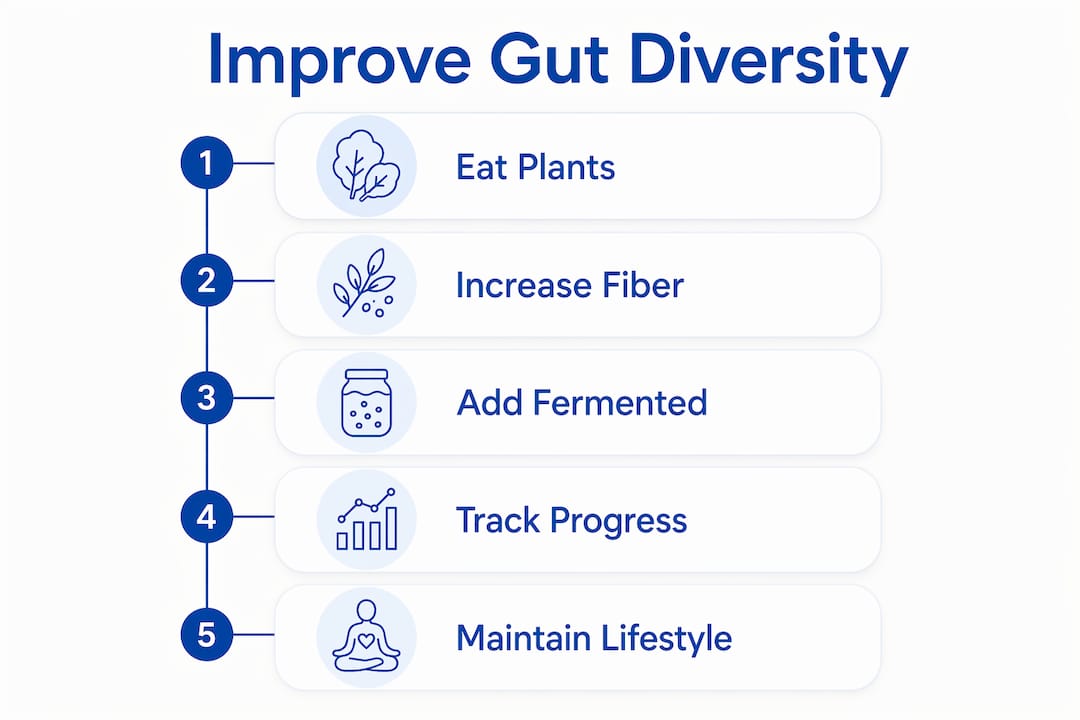
Add fermented foods every day. Consuming 2–6 servings of fermented foods daily is linked with increased microbiome diversity and measurable reductions in inflammatory proteins, including IL-6 and IL-12p70. Yogurt, kefir, kimchi, sauerkraut, miso, and kombucha all qualify. These foods introduce live microbes and metabolites that interact with your existing gut community.
Cut ultra-processed foods aggressively. Ultra-processed foods and artificial sweeteners can reduce gut microbial diversity by up to 40%. That is not a minor disruption. Packaged snacks, diet sodas, and fast food do not just add empty calories. They actively displace beneficial species and feed bacteria associated with inflammation.
- Eat at least 5 different vegetables per week, rotating varieties monthly
- Include legumes (lentils, chickpeas, black beans) at least 3 times per week
- Add nuts and seeds as daily snacks rather than processed alternatives
- Choose whole fruit over juice to preserve fiber content
- Replace one processed meal per day with a whole-food option
Pro Tip: Keep a simple weekly plant tally in your phone’s notes app. Counting distinct plant species, including herbs and spices, makes hitting 30 per week feel like a game rather than a chore.
How to add fiber and fermented foods safely
Adding fiber and fermented foods too quickly causes bloating, gas, and cramping. The discomfort is real, and it causes many people to quit before their microbiome has time to adapt.
-
Start with a fiber baseline. Track your current fiber intake for three days using a free food diary app. Most people discover they are eating 12–18 grams daily. Knowing your starting point prevents you from jumping too far too fast.
-
Increase fiber by about 5 grams per week. Gradual fiber increases of roughly 5 grams per week allow your gut bacteria to adapt without producing excessive gas. If you currently eat 15 grams daily, target 20 grams in week two, then 25 grams in week three.
-
Understand the two fiber types. Soluble fiber (found in oats, apples, and legumes) dissolves in water and feeds bacteria that produce short-chain fatty acids. Insoluble fiber (found in wheat bran, celery, and leafy greens) adds bulk and feeds a different set of species. Diverse fiber types foster richer microbial ecology than relying on one source alone.
-
Introduce fermented foods in small amounts. Start with one tablespoon of sauerkraut or a small 4-ounce serving of plain kefir per day. Give your gut one week at that level before adding a second serving. Transient live microbes from fermented foods modulate your existing gut microbiota and immune response without needing to permanently colonize.
-
Drink more water as fiber increases. Fiber absorbs water. Without adequate hydration, increased fiber intake causes constipation rather than improved motility. Aim for at least 8 cups of water daily when increasing fiber.
Pro Tip: If bloating spikes during a fiber increase, hold your current intake steady for two weeks before adding more. Slower adaptation is still adaptation. Quitting is the only failure.
What lifestyle factors outside diet affect gut microbial diversity?
Diet drives the most change, but three non-dietary factors meaningfully support or undermine your microbiome.
-
Sleep quality. Good sleep and moderate exercise both positively influence gut microbial diversity and function. Chronic sleep deprivation raises cortisol, which shifts the gut environment toward inflammation-associated species. Targeting 7–9 hours of consistent sleep per night is not optional for microbiome health.
-
Physical activity. Regular moderate exercise, such as brisk walking, cycling, or swimming for 30 minutes most days, increases microbial diversity independently of diet. Athletes consistently show higher diversity scores than sedentary individuals. Exercise appears to increase production of short-chain fatty acids, which feed beneficial bacteria.
-
Antibiotic use. Unnecessary antibiotic courses are one of the fastest ways to collapse gut diversity. A single course can reduce microbial diversity for months. This does not mean avoiding antibiotics when medically necessary. It means not requesting them for viral infections and discussing alternatives with your doctor when appropriate.
-
Stress management. Chronic psychological stress disrupts the gut-brain axis and alters microbial composition. Practices like diaphragmatic breathing, meditation, or even 20-minute daily walks reduce cortisol and support microbiome stability.
The most durable improvements come from combining all four factors. Diet alone produces gains. Diet plus sleep plus exercise plus stress management produces lasting change that shows up in repeated gut health scores over time.
How to track progress and avoid common pitfalls
Tracking your gut diversity score requires understanding what the number actually means and what it cannot tell you.
Gut diversity scores vary by lab method and cannot be directly compared across different testing companies. A score from one platform means something different from the same number on another. Clinicians use repeated measures from the same lab to track trends over time, not single absolute scores. This is the correct way to use microbiome testing: as a trend tool, not a diagnostic verdict.
“Focusing exclusively on diversity scores can be misleading. Health outcomes depend on the balanced presence of beneficial strains, not just raw species count.” — Gut Diversity Score Interpretation
Sustainable improvement in gut microbial diversity requires long-term lifestyle changes, not short-term fixes or expensive supplements. Most people see meaningful shifts in 8–12 weeks of consistent dietary change. Expecting results in two weeks leads to abandoning habits that would have worked.
| Common pitfall | What to do instead |
|---|---|
| Adding too much fiber too fast | Increase by 5 grams per week and hold if bloating spikes |
| Eating 10 fermented food servings on day one | Start with one small serving daily and build over two weeks |
| Comparing scores across different labs | Use the same lab for every test and track direction, not absolute numbers |
| Chasing supplements instead of food | Whole foods deliver fiber, polyphenols, and live microbes together |
| Expecting a 4-week fix | Commit to 3 months of consistent habits before evaluating results |
Practical signs of improvement appear before your score changes. Watch for more consistent stool form, less bloating after meals, steadier energy levels through the afternoon, and fewer digestive complaints overall. These signals confirm your microbiome is shifting in the right direction.
Key takeaways
Improving gut microbial diversity requires consistent dietary variety, adequate fiber from multiple plant sources, and daily fermented foods, sustained over months rather than weeks.
| Point | Details |
|---|---|
| Eat 30+ plant species weekly | Rotating vegetables, legumes, grains, and herbs feeds a broader range of beneficial bacteria. |
| Target 30–50g of fiber daily | Mix soluble and insoluble sources to support distinct bacterial communities simultaneously. |
| Add fermented foods gradually | Start with one small serving daily and build to 2–6 servings over several weeks. |
| Cut ultra-processed foods | These foods can reduce microbial diversity by up to 40%, actively harming your microbiome. |
| Track trends, not single scores | Use the same lab for repeated tests and watch direction over months, not individual numbers. |
What I have learned from watching gut scores change over time
Most people come to microbiome testing expecting a number that tells them exactly what is wrong and what to fix. That is not how it works, and I think the testing industry has done a poor job of setting realistic expectations.
The individuals who see the most meaningful improvement in their gut health are not the ones who obsess over their diversity score. They are the ones who quietly add more plant variety to their meals, eat a spoonful of kimchi with dinner, and go to bed at a consistent time. The score follows the habits. It does not lead them.
One thing I find genuinely underappreciated: microbiome composition is deeply personalized. Two people can follow the same diet and show very different microbial responses. Genetic background, stress history, medication use, and even where you grew up all shape your baseline. This is why a personalized report, one that maps your specific microbes to compounds and health conditions, is more useful than a generic diversity number.
The other misconception I see constantly is that supplements can replace food. Probiotic capsules deliver a handful of strains. A diet with 30 plant species per week delivers hundreds of distinct compounds that feed thousands of microbial interactions. The food wins every time.
Focus on the habits you can sustain for a year. Your score will reflect that.
— Digital
Digitalgut gives you a clearer picture of your gut health
Understanding your gut diversity score is one thing. Knowing which specific microbes are driving it, and what that means for your digestion, immunity, and energy, is another level entirely.

Digitalgut creates a personalized gut report from your microbiome sample, highlighting your key microbial strains, diversity metrics, and their connections to health conditions through an interactive knowledge graph. Every insight is grounded in peer-reviewed research and tied directly to your results. If you want to move beyond generic advice and see exactly what is happening in your gut, Digitalgut gives you the data to act on.
FAQ
What is a gut diversity score?
A gut diversity score measures the variety and balance of microbial species in your digestive tract. Higher scores generally correlate with better metabolic health and lower inflammation, though the score varies by lab method and is best used as a trend indicator.
How long does it take to improve gut microbial diversity?
Most people see meaningful shifts in gut microbial diversity after 8–12 weeks of consistent dietary changes. Long-term improvement requires sustained habits over months, not short-term interventions.
How many plant species should I eat per week to boost gut health?
Eating 30 or more different plant species per week significantly increases gut microbiome diversity compared to eating 10 or fewer. Count vegetables, fruits, legumes, whole grains, nuts, seeds, and herbs toward your weekly total.
Do fermented foods permanently change your gut microbiome?
Fermented foods introduce live microbes that modulate your existing gut microbiota and immune response, but they do not permanently colonize your gut. Regular daily consumption maintains their benefit, which is why consistency matters more than occasional large servings.
Can I compare my gut diversity score across different testing companies?
Gut diversity scores depend on sequencing method and cannot be directly compared across different labs. Use the same testing company for every sample and track the direction of change over time rather than comparing absolute numbers.